Thursday, July 24, 2025

AI is real and so is the bubble

Nowadays you can't avoid seeing the word "AI". AI is everywhere. Every company is rapidly adopting AI. Google today just released its earnings results which saw the top and bottom line beaten by a significant margin. But what worries some investors is the capex for 2025 is projected to grow to US$85bn. That's right. The Mag7 is spending billions and billions in AI infra buildout, front-running the anticipated accelerating AI demand. 

AI is data and power hungry

Remember that AI infra is expensive due to the high-cost GPUs and sky-high energy demands (nuclear energy is even needed). Training an LLM or AI deep-neural model requires massive datasets and energy , not to mention the associated R&D and talent costs. Data centers need large-scale cooling systems which require massive energy. Companies are poaching AI talents with multi-million-dollar salaries. They are also building nuclear power plants or leasing energy from them.
 

Who will be the winner?

Like all tech race, eventually there will only be one or two winners. In the 1980s personal computing era, Apple and Microsoft emerged as the winners and also amongst the largest companies as of today. In the internet era, Google emerged as the sole search engine winner. In social networking, Facebook emerged as the sole winner. You get the idea. What will happen to the losers? They will have to write off/divest their AI infra investments. Startups shutdown or consolidate one by one. The cloud revenues of Mag7 slowly taper off/decline as demand from startups fade away. The entire ecosystem collapses like a domino. There will be an oversupply of GPUs and you know what happens next. And then... the stocks will plummet and the bubble will eventually burst when investors become disappointed and disillusioned. 

Is it so simple?

Don't get me wrong. AI is real and does produce real productivity gains. Our lives and work will be completely transformed by AI forever. You can't put the genie back into the bottle. AI is here to stay. However, the bubbly part of this whole story is there are too many players -- OpenAI, Mag7, Perplexity, Anthropic, Mistral just to name a few. In any gold rush, most will be burned miserably at the end.  Any new tech will take at least a few decades to play out. Think of the personal computing and internet. After the first wave of AI hype cycle dies down, the winners will survive and continue to grow and dominate from there.

Parallels with the dotcom bubble

History never repeats but it often rhymes. There are many similarities with the dotcom bubble -- investors chasing after AI-related stocks, the Mag7 propping up the entire market, companies spending billions on infra anticipating accelerating demands that may never materialize so soon, sky-high valuations (all-time highs), most companies mentioning "AI" and related buzzwords during their earnings calls, absurd claims like AI will replace 50% of all human jobs. Nvidia today is basically the Cisco and Sun microsystem of 2000s. So much capex but with potentially diminishing returns. 

A perfect storm?

With that said, the stocks may go even higher for longer. Nobody will know exactly what happens next. The bubble may burst in the next few years -- either violently or gradually deflate. A macro environment with high interest rate, slowing economy and tariffs may provide the catalysts.

Other risks

The other risk is the invention of more efficient algorithms that require less data, GPUs and energy. Recall the DeepSeek "flash crash" earlier this year. This is a very real risk. Any breakthrough in research might cause another "flash crash". At the core of this AI revolution is the LLM which is basically the transformer deep-learning architecture with reinforcement learning. Before transformers, we have Recurring Neural Network and Long-Short Term Neural Net. So it is expected that active research will produce newer models/algorithms. The main problem with AI is that you'd have to constantly spend billions in R&D and training the models and to replace the GPUs every few years, otherwise you risk losing out to competitors. There is a lot of peer pressure to increase capex each year. As a result, it is very difficult for startups like OpenAI to be profitable. Before startups can even recoup the capex, they'd have to spend billions to train new models/algorithms. It's almost a never-ending game. Most companies are trapped in this AI race where they have to keep spending and spending to chase after finite demand.

Adding fuel

The US government has recently announced billions of investments in AI infra and made deals with nations in Middle East to build out sovereign AI. This further adds fuel to the fire. 

Warren Buffet

Is that why he has a record high amount of cash? Is he anticipating a bubble burst anytime soon? People keep saying don't ever time the market and he also preaches the same. But the truth is, he does market timing sometimes. 

Conclusion

  1. There are many big-name startups and smaller startups that drive up demand for AI infra, energy and cloud computing. They are all loss-making and burning cash rapidly to play in this very expensive game. Perhaps the most expensive out of all tech revolutions so far in history. The scale is unprecedented. And Mag7 and other big-names are still increasing capex exponentially. 
  2. When most of these startups die off after a few years, the demand for AI infra / compute may taper off/decline. There might be an oversupply when that happens. Whether the demand for these resources can be absorbed by other businesses remain to be seen. 
  3. To be profitable, a big-name startup needs to be dominant in its market, or at least get a lion's share and control its costs well, otherwise it is hard to compensate for the high burn rate. But given the massive competition, it is difficult to do so. Alternatively, raise prices for its products/services, but that may decrease demand. 

Who would be the winners?

I predict the incumbents -- namely the Mag7 will ultimately be the winners, not exactly sure which one but one or two of them,  as they are cash-rich and have an existing moat and ecosystem around their businesses. They are better positioned to weather any bubble burst. AI will enhance their existing products which will further improve their unbreakable moats. Microsoft is still the software king that has proven itself capable of integrating AI across its products. Google is also well positioned with deep research, big data and compute resources. It has access to an existing huge amount of data (Internet) for training its models. 


Monday, June 30, 2025

Liberation 2.0?

 As mentioned in my earlier posts, July 9 will determine the "final outcome" as the 90-day pause ends. My prediction as I have mentioned in Apr, is that after deals/pause, most countries will still be hit with reciprocal tariffs on top of the 10% baseline. There's not much reason to extend the deadline for most countries since the admin has no resources to negotiate with that many countries. They have said they had sent out "take it or leave it" offers to most countries but it will be tough for those countries to just accept without any negotiations. Nevermind about the smaller trading partners, the key is to watch whether there will be any extension for the top 10-15 trading partners.

Just today, there is a news article saying he's not intending to extend the deadline for countries with no deal. 

No deals yet?

So far we only have a "deal" with UK (one of the smallest trading partners). As predicted before, the economy has shown signs of cracks before any real deal.  

The tariff situation can only get worse from here. The level currently we have, is likely the best case scenario in the near-term. 

I think he is likely to bring back some of the tariffs otherwise countries will think he is "TACO" and won't take it seriously. On the flip side, he may change his mind. There might also be last-minute deals. So nobody really knows what will happen. Countries that are highly dependent on exporting to US may feel the pressure to accept a deal even if it is not in their favor.

I will just do some hedging.

There's also a tax cut bill that is intended to boost the economy by resorting to debt-fuelled growth again, the intention is to outgrow the debt and counter the impact of tariffs. Whether that can be done remains to be seen. Again, with the tariffs and the bill, how the market would react is stil an unknown.

Thursday, June 5, 2025

Next few weeks will be critical

 Previously, I mentioned that there is some euphoria/FOMO (Fear of Missing Out) in the market. Look at meme stocks like PLTR, HOOD, etc. and other AI-related names like APLD, Broadcom, CoreWeave, you will see they have ran up very quickly, almost vertically / exponentially with some of them forming a double-top pattern.  Stocks in general are fully priced, the market is being very optimistic right now. AI-related stocks are being chased aggressively ever since META and MSFT reported good earnings back in April, and of course Nvidia in May. From GPT: Magnificent Seven—Apple, Amazon, Alphabet, Meta, Microsoft, Nvidia, and Tesla—hold a significant share of the S&P 500. As of May 2025, they account for 34.1% of the index. Partly, the S&P index is being held up by Mag7 stocks due to the continuing AI fever.  AI is still in the early stages. Every tech revolution takes at least 10+ years to fully play out. Think of the internet, mobile revolution. There is immense potential for self-driving, robotics, AI-enabled software, etc. and investors have gotten ahead of themselves currently. Investors will be richly rewarded but the path to wealth will be treacherous and volatile. 

Economy is showing cracks

While the market can potentially creep up gradually, I'd be very cautious here and not allocate too much capital at this time. I used meme stocks  as a gauge of bullishness. When some of them form a double-top pattern (Mar and June), it is difficult to imagine them going up any further, thus there is an increasing chance of a strong pullback in the near future. Previously I mentioned the impact of tariffs will slowly be felt over the next 2 months, and we're starting to see some of the impact. I also mentioned we will see worsening economic data before any major trade deal (UK one is not really counted as it not one of the largest trading partners). The latest ADP payroll jobs data showed fewer-than-expected job growth. Producer price index keeps creeping up which would eventually translate to inflation or hurt corporate earnings. Manufacturing sector has been contracting for the past few months. Businesses are still hesitating to hire aggressively or make any long-term investments due to uncertainty around tariffs. Large retailers like Walmart, etc. warned of price increases and other retailers warned of declining profitability. 

Financially stretched


Consumer credit card debt is at an all-time high, and deliquency rate is increasing since 2022. Any slowdown in consumer spending will hurt economic growth. In fact, thrift stores like Dollar General have seen an uptick in customers from higher-income households, seen as a sign of economic uncertainty. Half of Americans live paycheck to paycheck and inflation will hurt their wallets and spending power. 

From GPT: 
more Americans are cooking at home as economic concerns grow. According to Campbell's CEO, home-cooked meals have reached their highest levels since early 2020. 

At the same time, Procter & Gamble (P&G) has noticed that shoppers are cutting back on laundry to conserve detergent.

This shift suggests that households are becoming more cautious with their spending. Things don't look good when the consumers even have to ration their detergent, etc. Lower-income households account for a significant portion of the GDP and cutbacks in spending will hurt the growth.

Why isn't there a crash or strong pullback yet?

Despite the bad economic data, it is quite surprising there is no crash / correction yet. I believe there are a few reasons: 1) Data is still considered not that bad yet or it could be somewhat priced in. 2) In a wait-and-see mode for trade deals, tax cuts which may boost growth or reduce tariffs. 3) Hoping that tariffs will be rolled back or reduced when there are signs of economic trouble.  4) Recession may be unlikely although there is a significant risk of stagflation. 5) market is still hanging onto lagging data from Jan-Apr (cooling inflation, stable employment, etc.)

The man has requested for countries to send in their best offers and by the end of the month, we should have more clarity on the "final outcome". Also there will be 20/30 year treasury auctions which may cause bond yield to spike. That's why the next few weeks will be critical. 

Debt problem 

I believe there is no practical solution to the budget deficit/debt problem, at least not a solution that a politician/president will implement without committing political suicide. The projected deficit is $1.9 trillion for 2025, which has been increasing steadily over the past few years. The only solution is austerity, higher taxes and severe budget cuts which will crash the economy and market. 

With higher-for-longer Fed rate, and will remain so due to the incoming inflation, the cost of servicing the deficit/debt is around 3.2% rate.  It may even go higher as the older debt gets refinanced at current Fed rate. They have to borrow money (by issuing treasury securities), to pay the debt interest. So the debt can only snowball from here.  It does seem that the debt will grow faster than the real GDP which is concerning. In 10 years, the debt-to-GDP ratio may reach 150%, from the current ~120%. If there are any crisis in the meantime which requires them to print money, it may go up even more.  

Lost decade?


With a debt problem and a potential stagflation, will we see a lost decade similar to the one from 2000 to 2008 (dotcom to GFC) where the S&P remained largely flat? From 2008 to 2021, the bull market has been phenomenal, largely because of monetary stimulation (money printing) and zero interest rate. 

What I will invest in

Should there be another dip which I think there will be in the near future, I'd allocate more heavily into AI-related software names and avoid any companies impacted by tariffs. The rationale is  AI can only keep growing in the future due to : 1) the 2 largest economies are locked in an AI race, and they are investing very heavily into AI infra/tech. 2) Tech will always progress and improve. 3) Tech has been the primary driver of economic growth for the past 4 centuries and beyond, and hence tech companies have consistently been able to capture a larger share of the growth.   

We're still early in the revolution, and thus choosing the right companies is crucial. In tech, it is usually the winner that takes all so we want companies that can remain competitive and outlast everyone else. Looking back at the Search Engine 1.0 war around the dotcom era,  there were many search engines (AltaVista, Yahoo, etc.) but ultimately Google won the race. Likewise, you know who won the social network war (FB, Friendster, MySpace, etc.). Google's dominance is now being threatened by new challengers in a Search Engine 2.0 war. 

Inflation may remain sticky, and interest rate will remain high, so choose companies with strong balance sheets that have pricing power. However, with that said, I may still allocate a small amount of capital to emerging tech such as quantum computing, etc. 


Wednesday, May 14, 2025

Euphoria in the market

 After the announcement of the pause in the trade situation, the markets went all euphoric. The fear/greed index right now is extreme greed.  This index is one of my favorites as it guides me when to buy/sell stocks. Even if you're a long-term holder, it might still be useful. The market is also overbought. I'd say this is the time to be cautious. Remember this fact, based on years of historical data: no market goes up forever, especially when it goes up so high so quickly. You can look at every chart you can think of, when a stock/index goes up so much so fast, eventually it will come down. The converse also happens, the bigger the crash, the higher the eventual rebound, which is what we're witnessing right now. I'm not saying this is the time to sell everything, but personally I'd take some profits and start to do some hedging. Any bad news can cause the rally to stop or even drop. My belief is that even though the liberation day losses are erased, it may not go back to all-time high. There is still some risk of stagflation/stagnancy even though there might not be an outright recession.  

Difference from 2018-2020 Trade Situation

It is likely the 30% on China and 10% universal on major trading partners will be the 'best-case' baseline going forward. Not to mention there are also 25% on auto, steel, etc. Possibly more incoming. Also we have high interest rate, and a record high of consumer credit card debt. Note that 70% of U.S. economy is based on consumption. A weakness in consumer spending spells trouble, and at the beginning there is already some warnings from consumer staple companies/retailers regarding this.  No doubt some of these may be cushioned by other areas such as tax cuts, investment growth, AI capex, etc. But it remains to be seen how it will play out over the next 3-6 months. 

Monday, May 12, 2025

A toothless tiger, nobody will take this trade war seriously

My analysis for the past few posts are thrown out the window. The announcement to mutually reduce tariffs by over 100% shows their weakness. Originally it was thought they would at least put up a fight, but who knows their pain threshold is so low? They have shown themselves to be a toothless tiger, big roar but no bite. Totally just caved in front of China. China didn't even have to make any concessions or uphold previous deal from 2018-2019. If I were China, I wouldn't take it seriously and will even take a tougher stance. Expect the same from other trading partners, I wouldn't be surprised if most of them starts to play hardball. This on-off nature is exhausting to investors/traders/businesses. 30% won't stop them from importing China goods, so in the end they will end up on the losing side for paying the additional taxes. A totally meaningless situation that does more harm to themselves. Again expect inflation to creep up over the 2-3 months, though it will be less than forecasted, probably won't be high enough to cause any real pain. Fed might even consider raising rates, who knows? Q2 GDP numbers might be weaker than usual again as businesses might do some front-loading/stockpiling again before the 90-day pause ends in Aug. 

My conclusion is: no recession, no bear this year unless of course there are some drastic escalation again. I will just invest/trade normally. All these tariffs are just pure noise. Any dip is a buy. Even if he announces 100% pharm/semi tariffs, it is still a buy opportunity because we all know it will just be noise eventually. If there is any economic damage, Fed / government will step in to save the day. So no worries of any doom / gloom. 


China emerging as the leader of the new multipolar world order

They can't even win a trade war, or whatever war. To make weapons, they have to rely on China's materials. Therefore they can't even win a hot war. I will look to accumulate China equities when it dips a little, and diversify a little.


Is this 2022 all over again?


Update: some of the below points may no longer be valid due to the recent trade truce.

This is going to be a long post. Many things have happened for the past few weeks. To understand where the market is heading, we need to understand the reasons behind the trade situation as stocks are increasingly mixed with geopolitics regardless of whether we like it or not. This trade situation is much more serious and broader than the first in 2018-2019. Previously I have discussed the motivation behind the trade situation, based on my analysis of the many articles I have read. Let's recap, the objectives are:

1. Manufacturing self-reliant. They want to be able to manufacture their own critical products without relying on foreign countries. Example, semiconductors, rare earths, steel, automobiles, etc. That's the reason why they have wooed Taiwan Semi TSM to setup factories in the homeland. Also that's why they have auto tariffs to protect domestic auto industries, especially against the flood of cheap foreign EVs. What's the reason? In the event of conflicts, they must be able to manufacture their own products, supplies, etc. 

2. Reshoring jobs for the lower-income groups. To re-industrialise some critical sectors and buildup the know-how. 

3. Counter the second largest economy, similar to how they dealt with their main opponent during the first cold war. Also, how they dealt with the rise of Japan from 1960-1980s.

4. Boost government tax revenue for other initiatives like tax cuts, etc. Reduce debt load and the deficit. Boost GDP growth via increasing exports globally. 

However, it is not smooth-sailing to achieve the aforementioned objectives. There will be many hurdles ahead, and there will be economic/non-economic damage in the meantime. But they will still try to do it anyway, as they are very determined to solve the above problems that they perceive as critical. Some of these objectives are not entirely new, they are a continuation from the previous administration. Recall the CHIPS act which was setup to woo TSM to come to the homeland? Every administration has a different style of executing the objectives. But also each administration has some of their own unique objectives due to their governing philosophy (for example tax cuts).  

Final outcome

There are 3 camps here: (1) believe that the troubles will go away with the deals, and the economy will be back to normal, just like in 2019. (2) deals won't make much difference and there will still be substantial headwinds. (3) those in between. 

I am leaning towards (2). With the objectives in mind, I think the final outcome, even after all "trade deals" are done, will be 10% universal on most trading partners, 20-30% for "average" partners and 40-60% for the "worst", proportional to the trade deficits. This is inline with what many experts have mentioned. Think about this: if the second largest economy gets only 20-30%, there is no real need to negotiate or be too serious about it. So they have to come down hard with a much higher level.
 
Recently, there has been a small UK "deal" which many experts dismissed as more of theatrics, rather than any major win. It only affects $6bn worth of imports which is tiny considering the trillions of total imports. Of note the 10% baseline remains,  and during the presentation, they also highlighted the "external revenue" which means they really want to use tariffs as a source of revenue, so all the more the baseline won't go away even after the 90-day pause.  

Deal or no deal?

A real trade deal takes many months or even years to be negotiated. It is unrealistic to expect any substantial comprehensive deal to be signed during the pause. Experts have said that it is more likely for "frameworks" or "MOUs" to be signed instead which might be re-negotiated down the road. 

Fed rate cuts

Analysts have priced in 2-4 rate cuts in the second half of the year to boost economic growth and counter unemployment. The Fed will be in a tough spot since there may be higher inflation and unemployment. Their dual mandate is to maintain low inflation and strong employment. If they cut too soon, inflation may worsen; cut too late, may risk a recession. Indeed, the chair has said recently the risk of stagflation is getting higher. The Fed is not perfect. They have made mistakes before, example during the pandemic when they thought the inflation was transitory and in the end they raised rates too late and had to rush the raise in 2022. This time round,  I think it will be even more difficult not to make a mistake. They also prefer to adopt a 'wait-and-see' approach which means there might be a chance they act too late. 


More coming soon?

There might be more coming: pharma, semi, minerals and others. "All-rounded" to cover almost every critical sector to achieve the earlier objectives.

Market reactions

Meanwhile, every piece of good news, no matter big or small, will get the market excited. To me, the deals don't really matter since they simply point the way to the final outcome which might have been priced in already to a large extent. The market may slowly inch up while bad economic data pulls it down. We have already seen this on Apr 30 where worse-than-expected data caused the market to drop 2% on open.  This coming week, experts have already forecasted inflation to creep up gradually. So bulls and bears are fighting over the next 2 months. I think ultimately, there may be another leg down, unless the trade situation is scaled down significantly very soon. Eventually the market may realise the reality -- higher inflation, increasing unemployment, lower growth, etc. And then there may be headlines running fears of stagflation/recession.  This year may be similar to 2022, a sideways market, but whether it will trend down or up, depends on how the trade and economic situation evolve. 

Update: some of the above points may no longer be valid due to the recent trade truce.


Monday, May 5, 2025

Is a bear market coming?

Major indices have staged a remarkable comeback in the past 10 days and recovered most losses since Apr 2. However, whether or not this rally will continue as per normal into a bull market depends on several factors. It is difficult to know whether you're in a bear until you see one / strong signs of lower highs and lower lows, but by that time, it will be too late. Nobody would know for sure and it's always in hindsight that you will realise this is a bull or bear. Even in a bear, there will be strong rallies like this one, example in 2022, where the market is whipsawing while trending downwards. 

Motivation behind this trade situation

To understand where the economy and market is heading, let's examine the movitation behind the current trade situation. I think their main objectives are (1) reshore manufacturing of critical products so as to reduce reliance on foreign countries. (2) bring some jobs back for the lower-income groups (3) encircle/isolate the second largest economy. (1) is especially important as they are currently overly reliant on foreign imports for critical materials and goods.  There are many articles talking about (1).  (3) is just repeating the playbook for how they successfully isolated that "well-known" country during the first cold war which led to its collapse. Now they are partnering with the largest populated country to counter the second largest economy.  Overall, this is a very dire and serious situation for them, as (1) and (3) concern their survival. There are also secondary objectives like increasing their exports to boost GDP and to reinforce their current dominant position in the global economy, thus ensuring their continuous relevancy. With this context in mind, it is likely that they won't give up so easily, that is, this trade situation will last for several months at least, although there might be some de-escalation which may not come soon enough to fend off any economic fallout. 

Any deals soon?

There have been a lot of news regarding talks, etc. Also Australia and Canada have just concluded elections recently and their new leaders are not so friendly towards "them". Hence it is likely talks with these countries will take time and possibly met with obstacles. Even traditional friends like Japan and South Korea are expecting a deal only until July, and there are still hurdles to be ironed out. So deals may not come so soon in the next few weeks, except for India which could be one of the first to sign. Overall I don't think there is much incentive for these countries to conclude a deal so quickly before July. 

Economic data

The April jobs report was released in May and appeared better than expected. Of note, the "nonfarm payroll" of 177k was better than the expected 130k. I'd take this with a pinch of salt as this number is based on surveys which could be inaccurate. In fact, the numbers for previous months have been revised downwards subsequently after being released.  From GPT:

Nonfarm payroll data is a valuable economic indicator, but it does undergo revisions that can sometimes be significant. The Bureau of Labor Statistics (BLS) releases initial estimates based on survey data, which are later adjusted as more comprehensive information becomes available. These revisions can reflect seasonal adjustments, updated employer reports, or benchmarking against more complete datasets


Anyways, data for Jan - Apr are backwards looking and largely untainted by the trade situation. There is also distortion due to front-running by stockpiling. Going forward, experts have forecasted higher prices/inflation, supply chain disruptions, shortages and even mass layoffs due to slowing trade between the 2 largest economies. I think the full impact will be felt during the next 2 months. Such a scenario will be tricky for Fed to cut rates.  If inflation goes up but labor is still OK, the Fed may not cut rates. 

De-escalation

Time is of essence here to minimise ecnomic damage. I think the longer  this drags, the bigger the damage. Previously, Walmart, Target and Home Depot have sought reliefs but did not get any. There are some exemptions already but going forward, I don't think either side will de-escalate (in a meaningful way) unilaterally without any mutual agreement/deal, as neither side wants to be seen as "weak", and they are determined to achieve the aforementioned objectives. I think both sides will need to talk for at least a few weeks before any mutual de-escalation happens. Any comprehensive/serious talk will take several months at least. One side wants to exert max pressure and would not lower voluntarily unless there is some serious situation (example, bond markets, economy crash). Even if there is de-escalation, how much lower can it go to? 50%? 100%? 100%  is still very high and may not reverse any damage. 50% would likely increase inflation and drive lower growth without causing a recession. 

Conclusion

Since the current rally is based on (1) hopes of de-escalation (2) backward-looking economic data and earnings, going forward, without any meaningful de-escalation / rate cuts, the market may likely drop as new economic data worsens over the next several weeks.  The speed and magnitude of de-escalation are both important in determining the extent of future damage. Also, given how furious this rally ocurred, it will need continuous positive catalysts to sustain, otherwise it's likely the current positive sentiment gradually wanes off. Further, deals and de-escalation are unlikely to materialise so soon to support the sentiment. 

Various outcomes are possible: outright recession, high inflation with low growth, etc. I can't imagine any positive outcome, unless the trade situation is entirely resolved, which itself is unlikely. Whether the market has truly bottomed depends on how the trade situation evolves. 


Friday, April 25, 2025

Is the market rally sustainable?

With the recent news regarding a potential de-escalation, we're seeing a relief rally. Whether or not this rally is sustainable depends on how soon the de-escalation happens and the economic data going forward. However, there is some mixed messaging: 1) the 145% hasn't gone down yet 2) one side is saying there has been trade talks while the other side denies it. Also what happens after the 90-day pause? The current earning season may be "untainted" by tariffs, so results could be decent/good. But going forward, not so much. So there is still a lot of uncertainty. 

There are a few ways this could play out: 1) both sides de-escalate on their own without any talks, for example, by granting exemptions or simply reducing tariff level. 2) one side reaches out to the other to kickstart negotiations 3) no or little de-escalation. 4) Escalation before de-escalation again.  Scenario 1 may be likely since it is already happening.  Scenario 2 seems unlikely since one side promises to "fight til the end" and demands mutual respect and removal of tariffs, and so why would they negotiate when the other side is de-escalating on its own? Scenario 3 is the least unlikely since it is unsustainable in the long-term. Scenario 4 could be possible. Therefore I think there is a high chance of de-escalation. But to what extent will it de-escalate and how will it impact the economic data? There might still be some level of tariffs on the major economies even after negotiations or de-escalation, and that would weigh on the economy. Since there are too many variables and moving parts, I can imagine it is very difficult for experts to provide accurate forecasts. Hence there will be much uncertainty and possible volatility when the actual data is released in the future, especially when the actual data mismatch the forecasts. 

So far, my nibbling has been profitable. While I don't think the rally will go all the way back to all-time high, I think the market has bottomed out since both sides are trying to avoid negative outcomes.  Any big dip could be worth accumulating. I have been doing hedging using volatility ETFs which I prefer for various reasons that I may reveal over my next few posts.  

Sunday, April 20, 2025

Is it safe to buy stocks yet?

It's been a long while since I updated. As shared previously, I am mostly in cash as I have foreseen some turmoil at the beginning of the year. When the major US retailers have started sounding off the alarm in Feb/Mar regarding weaker consumer spending, I sold off most of my holdings. Since then there has been a lot of volatility. I have been trading hedges and volatility ETFs. The sentiment is still very weak with a lot of uncertainty. The 2 largest economies have not yet started negotiation. The tariffs are forecasted to hurt the economy especially with small and medium businesses taking big hits. Inflation will return and growth will slow. There is already some evidence that the stance may be softening, judging by the exemption of electronics and semi, and call for rate cuts presumably to cushion the inflation impact. Afterall, with domestic pressure, and rising unfavorable polls, I don't think the tariffs can continue for too long. In fact, the man himself said there could be a deal with China within 4 weeks, somewhat implying that the whole thing should come to an end or de-escalate soon.  I am doubtful a deal could happen so soon though, if at all, since the 2 leaders are not even talking directly yet. Even if there is a deal, it might be one that is not so favorable, and there would still be some level of tariffs. I don't think all the tariffs will be removed. Further, there might be more coming soon, semi/pharma/minerals tariffs. 

The 2 main uncertainties are how high would inflation go, and how low will economic growth go? Recently, all forecasts have been not very accurate. Going forward, the forecasts will be even more inaccurate given the chaotic situation right now. Any misexpectation will cause shocks to the stocks.

It is really hard to say whether the bottom is in, especially given that there is no Fed 'put'. Will the markets drop further before recovering or just go up from here? Therefore, it might be wiser to just DCA slowly for those long-term investors, and hold really strong stocks that can weather any storms. For me, I will just continue to nibble very slowly while trading hedges. 


Monday, March 10, 2025

Almost empty portfolio

 The past few weeks have been a wild ride. The sentiment has been extremely bearish. I had to cut lost my short-term positions. The reason I have not been writing is because I have not taken much actions so far. My portfolio is almost empty now. I am looking for the market to stablize before going in big again. Valuations of some tech stocks look much more attractive than before, but some may argue they are still overvalued. To each his own. I think it's all relative. The stocks I sold have all dropped far below the prices I sold at because I know a big storm is coming so I acted early. Hoping to buy back at lower prices. Yes market timing at work. I am concerned that I might also miss the eventual rebound (if any) so I am just "nibbling" very small positions, to keep myself vested. When the time comes, I may average up to catch the wave. For now, I can only wait. 

So far value, defensive, healthcare and consumer staples stocks are holding up well, and even went up 5-10%. Examples : McDonalds, J&J, Colgate, and many others. Due to my busy schedule, I didn't manage to move my money into these stocks fast enough. Otherwise I could have made some small profits. It is obvious big funds are acting on their risk-off playbooks since many funds are required to remain X% vested.  Tech and AI-related stocks have taken a beating mainly due to overvaluation, overcapacity and economy concerns. It is obvious there is a rotation away from tech stocks due to risk-off sentiments. But the situation is very fluid now, once the bullish sentiment comes back, value stocks will drop and tech will go up again. But for now, it is hard to know when the bullish sentiment will be back. 

On the other hand, I kept missing out on the rally in China markets. I should have paid more attention on what's happening. Europe defense stocks rallied as well which I normally don't even pay attention to and frankly don't know well enough to have a position. Since I don't know whether the rally will continue or even turn bearish from here, I will give it a miss this time round. I sold off China stocks back in 2023 because they were either going sideways or trending down with no signs of recovery, little did we know they would make a comeback in late 2024/early 2025. The China stock rally is mainly due to stimulus, AI play, and more "assurance" that tech crackdown has stopped. Some argue that China stocks are cheap and undervalued but they are for a few good reasons -- economy, government, geopolitical, and even cultural. Cultural in the sense that I don't think they would be able to build up a consumer-driven economy like the US at least not in the next several years as Chinese people just don't really have that mindset of spending money like no tomorrow, unlike their US counterpart. Henceforth this deflation issue would stick around for a while. If government doesn't spend,  the people doesn't spend, we can only rely on corporations to spend to spur the economy. In the past since 2008 GFC, China has relied on large-sale infra building to spur the economy (it has now the largest high-speed rail network and largest cities), it literally built itself out of recession. The economy was spurred to a significant extent by government spending with the people riding on the property boom. Now that all these are slowing down, it is no wonder the economy took a hit. Transitioning to domestic consumption is a very difficult task.  I doubt the stocks will ever be fully-valued or reach their true valuations at least in the next 2-3 years. I am not against them but am saying enter with your eyes wide open. Without giving more details, investors also need to understand the alignment of interests between government and corporations regarding stock markets. US on the other hand, the S&P went up even higher at the end of Trump's first term despite the trade wars (but of course before Covid started).  Will this time be any different as the circumstances are different now with high inflation, weakening labor market? Only time will tell.  Well, investing and trading should be based on probability and calculated risks. If you ask me, the answer is pretty obvious. 

In the US market, from the Nvidia and Broadcom decent/strong results and forward guidance, I think the AI theme still has some room to run, so I am slowly accumulating bit by bit, but don't dare to go in too much since they are still in a strong downtrend. Nvidia in particular looks fairly valued or even slightly undervalued even after considering its slowing growth rate. I don't expect Nvidia to melt-up or even break its own high in the near-term, even when the bullish sentiment is back. Another thing to consider about the semiconductor industry is tariff/export restriction risk. I doubt the 25% tariffs would follow through, as it would really have serious consequences. Overall, considering all factors, I may just take a small position or go for an ETF instead, or maybe go for a larger short-term position. The AI industry is expected to grow 15-20% CARG until 2030 which is in line with historical tech trends like Internet, smartphone, etc. It usually takes several years for new tech to be improved and widely adopted. I am also looking at the cybersecurity sector, specifically the ETFs, not individual stocks like Crowdstrike/Cyberark since their sky-high valuations are undergoing a correction right now. It seems like quite a defensive sector due to increasing cyber attacks / data leaks. In fact, cybersecurity is one of the top concerns cited in a global business leader survey.  

During my research, I also found out about some very interesting high-yield US ETFs giving >10% annually. Stay tuned for the next blog post!


Monday, February 10, 2025

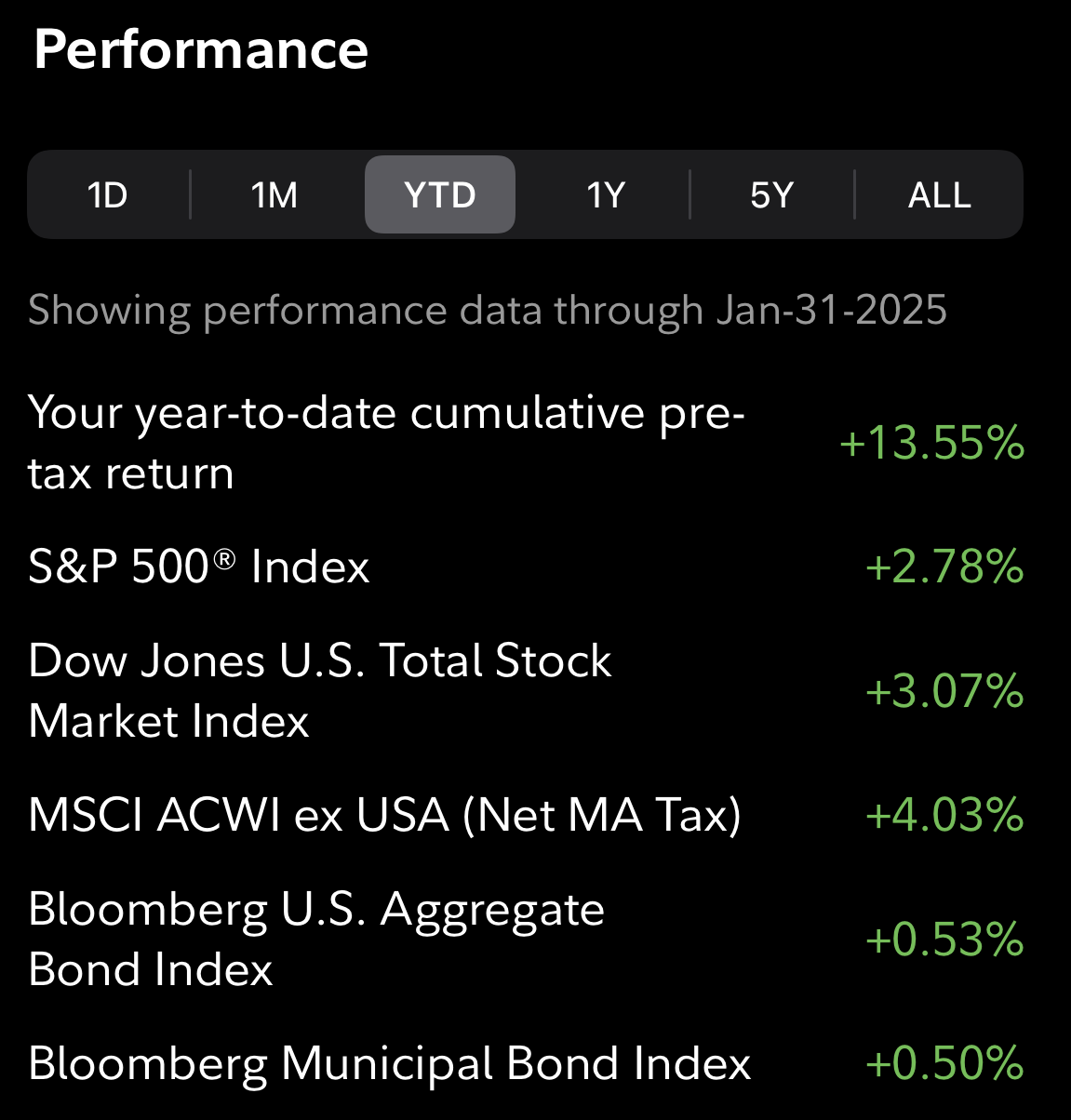
Recent Trades: YTD all accounts beat the S&P index

Recently, I sold off the leveraged ETF for one of the semi stocks this week.  I bought on last Friday but it dipped suddenly on Feb 2, Sunday overnight trading when Trump announced tarriffs. The price went 10% below my purchase price but given that the stock has strong momentum, it bounced even higher after a few days and I gained 10% when I sold off. Why I don't post exact stock symbols/name is because of the recent MAS regulation. My posts are purely for educational purposes only, and I do not provide any financial advice nor sell any financial products. 

Buying and selling leveraged ETFs is risky, and one has to be very careful with the stock pick. Always set a cut loss and monitor carefully.  As I shared in my previous posts, I have been allocating more capital to short-term trading and now I hardly have < 10% long-term holdings, because there is a greater uncertainty this year due to trade wars, slowing down of rate cuts, a possible rate increase and doubts on AI capex spending. The fear/greed index is still showing fear, the longest streak it has been since 2024.  

One of my smaller accounts had a 80% gain from June 2024 to Feb 2025. I had losses and profits. One of the biggest losses is 20% for a commodity leveraged ETF which I forgot to set a cut loss. But fortunately, I was able to recoup the losses via a few trades.  I am looking to scale this profitable strategy up to my main account which is not so easy given the much larger capital. It is mentally and technically quite difficult to 'deploy' large sums quickly for a trade. 

I'm sure there are many times when you cut loss or sold, only to see the stock rise up even further.  I had many such encounters in the past. Example, as explained in this past post  I sold off 2 SaaS tech stocks during the  period of uncertainty and now they have went up by 10-20% since then. Do I regret? Yes and no. Looking back, I felt uncomfortable and wanted to increase my cash level. But of course, who doesn't want to make more $? 

One way to reduce risks for short-term trading, is do not hold your positions over key events / weekends. Easier said than done, so always be prepared to cut loss or average down. Key events such as company earnings, economic news, etc. 

Many of you have messaged me privately what is a leveraged ETF? I will explain more in my next post.


Sunday, February 2, 2025

DeepSeek sell-off is a great opportunity

I wanted to write this post earlier, but I was busy with life & work. It's very fortunate I sold off my semi positions before the DeepSeek rout. I sensed the greed due to the "Stargate" news (explained in my previous post). Each time some thing surged up too fast too furious, you know it's time to take profits.  

During the sell-off, I did some quick trades using semi and crypto leveraged ETFs. And another easy 10-20% returns. Every time there is fear and deep plunge, there will surely be a quick bounce the following day.  YTD my accounts have beaten the S&P. The volatile market is indeed a trader's dream come true. The market is quite predictable in many ways. Through my daily observations of the market and monitoring of hundreds of stock charts, I have recorded down many patterns and devised multiple strategies to generate low-risk, high-yield returns. I have a few different accounts. 

I hope I can inspire some of you out there to pick up trading. It is not so easy, and yet not so difficult. It just takes a lot of courage, discipline, judgment and emotional control. Sometimes you have to go against your instincts and think logically. For example, buy on fear and sell on greed. It's usually easier said than done. Also you'd need the ability to pick the right stocks to trade. 


Past year performance:


Monday, January 27, 2025

More winning trades: 10-20% profits

 Recently, sold off some semi leveraged ETFs when I see them surged so much based on news of "Stargate". Took profits of 10-20% from these trades. When it dips again, I will buy some to trade the bounce. In this year, I think I will allocate more capital towards short-term trading. Imagine you'd just need to have 10% profits for 3 times (using your entire portfolio capital), and that will mean > 30% gains in the year, sufficient to beat the market.    But of course, easier said than done. I have managed to achieve 40-60% CARG in my smaller accounts last year and hoping to achieve the same using my main, larger account, using the same trading strategies.  

I am also looking to buy some strong growth companies on weakness. I noticed some strong stocks, when they dip 5-10%, they will quickly bounce back. Examples are FB, Netflix. 

The first thing any investor or trader should think of is: what is the risk or downside? To me, that's the most important factor before entering a position. There are so many kinds of risks we need to be aware of, so trading is not that easy, but with hard work and discipline, it's not that hard either. I will talk more about the various kinds of risks next time. Also how to pick the right stocks to trade. Stay tuned!


Monday, January 20, 2025

Recent profitable trades: win rate 100%

Recently, I have made several trades, making anywhere from breakeven to > 10% profits due to the recent volatility. I focus on tech and semi related and non-tech leveraged ETFs that have strong momentum / breakout.  The sideway movements of these stocks make them good targets for swing trading. My frequent mistake is I don't take profit in time, and the profit either drops or turns into a loss, and then I will have to cut loss or wait for a rebound. If the stock is worth holding, I will just hold. But fortunately, so far, my win rate has been 100% for the trades made this year.   

The market is still in fear, the longest streak for the past 3 weeks. I am being careful here and have sold off Monday and IOT which I bought earlier, with a small profit. Still holding onto TradeDesk with a small profit. With the earnings season here, there could be more volatility ahead, though so far we have some good news for the inflation front and bank earnings.  

For the past 2 years, the US market has been going up strongly due to expectations of Fed rate cuts. Now that the rate cuts are expected to slow down, who knows what will happen to the market? As such, I am moving more towards short-term trading. I am waiting for a good entry point to enter long-term for the stocks in my watchlist. I am also having a concentrated portfolio which I can easily focus on given my other committments.  

https://www.cnn.com/markets/fear-and-greed


Thursday, December 26, 2024

$3m net worth: A new post after a long hiatus

It has been 5 years since my last post. As we come to the end of 2024, I thought of sharing some updates and resuming my blogging journey. Since the pandemic in 2020, I experienced many changes in my life that took time away from blogging: new family, kid, change of jobs, new hobbies, etc. 

I reflected on my investing journey and life, and I was neutral on how far my net worth has grown. I could've certainly been more aggresive  in taking up more risks in investing, for higher rewards. You could say that I am a person who is always pushing myself ahead and never be contented with what I have. 

I have a "growth mindset" and I believe everyone should adopt it as well. One should always stay hungry, continuously try to learn more to improve. Never be afraid of failures. "Stay hungry, stay foolish".

Anyways, for the past year or so I have experimented with various short-term trading strategies in my accounts. Some of the accounts reached 40%, as high as 60% annualized returns. These are accounts with small capitals ranging S$20-150k. I hope to scale up the strategies to my main account for more profits. I have experimented using single index/stock leveraged ETFs to juice up the returns. 

I have also adopted a more aggressive growth investing approach. I have divested all my China and SG stocks, and moved entirely to US markets. China is currently experiencing an economic "turmoil" and may stay that way for multiple years, not to mention the geo/domestic political risks. SG market is still quite "dead" in this high interest rate environment. The usual investible companies are the banks and REITs and a couple of "growth"/value SME stocks. In the past, I have analyzed over 500 SG and China stocks and my conclusion is: Ultimately, US markets boost the highest returns with relatively lesser risks and has many more high-quality growth companies globally as they choose to list in the US exchanges over other regions. The US economy continues to do well in spite of inflation due to strong consumer spending (70% of the GDP) and government spending in the form of deficits and of course the ability to maintain the strength of the dollar due to its reserved currency status.  Putting aside social issues, from an investor's point of view, US markets are the heaven.

But some may argue US stocks are overvalued based on historical benchmarks. To that I will just say being "overvalued" may be the new norm now since there are a lot more liquidity (since the pandemic) vs investible companies. You simply can't use the historical P/E ratios to benchmark stocks nowadays. Historical benchmarks have to be adjusted by the amount of liquidity present in the markets. Growth stocks are always overvalued. The entire world, retail investors and sovereign funds alike, are investing in the US markets, so what do you expect?

Some stocks that I recently picked up include Monday.com and Samsara as their recent drop in prices present an opportunity to accumulate.  The prices are very volatile so I'd have to monitor them carefully, and cut loss when necessary.  I also made use of the dip after Powell's speech to add to SPY (using a leveraged ETF), so far this new position return has been 10% in just a few days.  

My portfolio now consists of long-term and short-term positions that are highly concentrated, fewer than 10 stocks. I believe in going in big to make a big return when I see an opportunity. Cut loss quickly if the thesis doesn't work out. If you have too many positions, you will just get the average return of the positions. To beat the index, you'd have to make sure all of these positions beat the index which is hard. So by making your portfolio more concentrated, you take up more risks in the hope that you increase the likelihood of beating the index. Fewer positions also make the portfolio easier to manage and monitor.

My trades/investments involve investing in a base index ETF followed by some positions to juice up the returns so I can beat the index. I applied the many lessons I learned over the years to make sure I consistently get high returns. It requires very strict discipline not to chase after FOMO stocks, etc. Otherwise one mistake can erase your hardwork for the year. I usually trade volatile tech stocks (swing trades), and "undervalued"/beaten down value stocks. 

Good luck everyone and enjoy the holidays!


Friday, November 15, 2019

Cashback vs Miles

There are numerous debate on this topic.  I have been a cashback person all the while and recently have been wondering whether it's worthwhile to switch to miles. However, I have yet to see any concrete quantitative analysis to aid my decision hence I decided to do one myself as I'm an analytical person.

Methodology

I try to be as objective as possible and am open to switching to accumulating miles as I am a person who wants to stretch the dollar value of my expenses.

Assumptions: 

  1. I'm analysing this based on a long-term sustainable and realistic spending habit, i.e., not spend for the sake of spending or to buy that ultra expensive luxury/big ticket item. To further elaborate, this is done in the context of the average income earner (mass majority of us), not those super rich or those who spend frivolously. 
    • Anyway, for those who can afford to spend > $5 / month consistently, why even bother about rewards and cashback (which are insignificant to your expenditure)?
  2. I assume a round-trip from Singapore and miles accrual is in KrisFlyer. 
    • Hence I will use the latest SIA KrisFlyer Award Chart (effective from Jan 2019) to select the representative zones and the lowest number of miles needed for a round-trip redemption across Economy Saver and Advantage. Based on this post, taxes and fees have to be paid using non-miles.
I also scanned through the miles credit cards for a sensing of mile accrual rates, card annual fees and the T&Cs.

Analysis (Economy Flight)

Refer to this spreadsheet screenshot for the analysis (click to enlarge).


Meaning of the columns:

Amount to spend: I calculated the S$ to spend to get the min no. of miles required, assuming various accrual rates (i.e., 4 / 2 / 1.2 miles per $). Most of the cards give 1.2-1.4 miles per SGD spent locally, hence the realistic rate is 1.2 miles / $.

Cashback earned: I calculated the cashback that can be earned on the "Amount to Spend" assuming using the Maybank Barcelona Card which gives a base 1.6% rate for all eligible expenses. But of course higher rate is possible through careful optimisations such as by spending in categories with higher rates and/or utilising better cards.

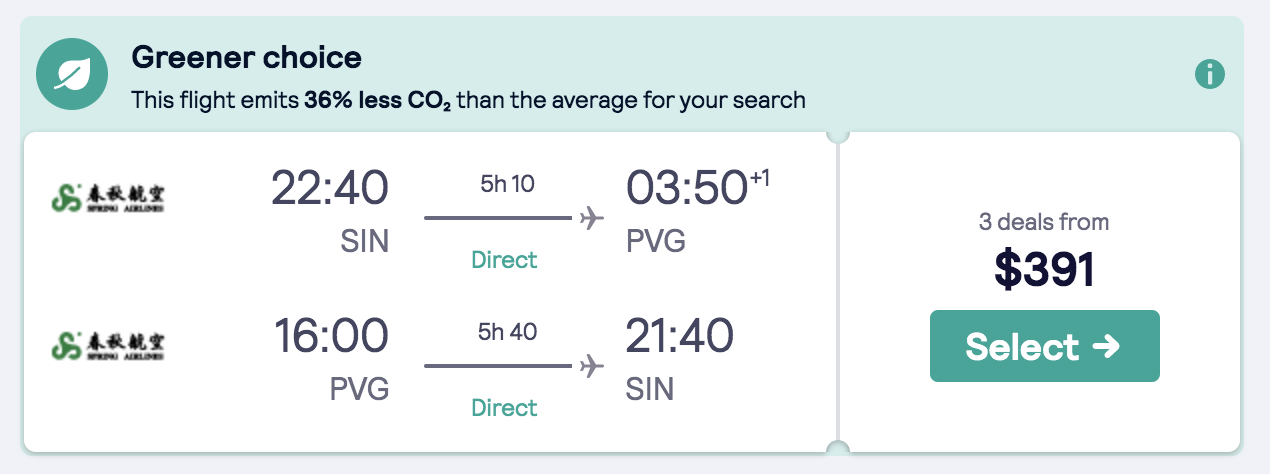
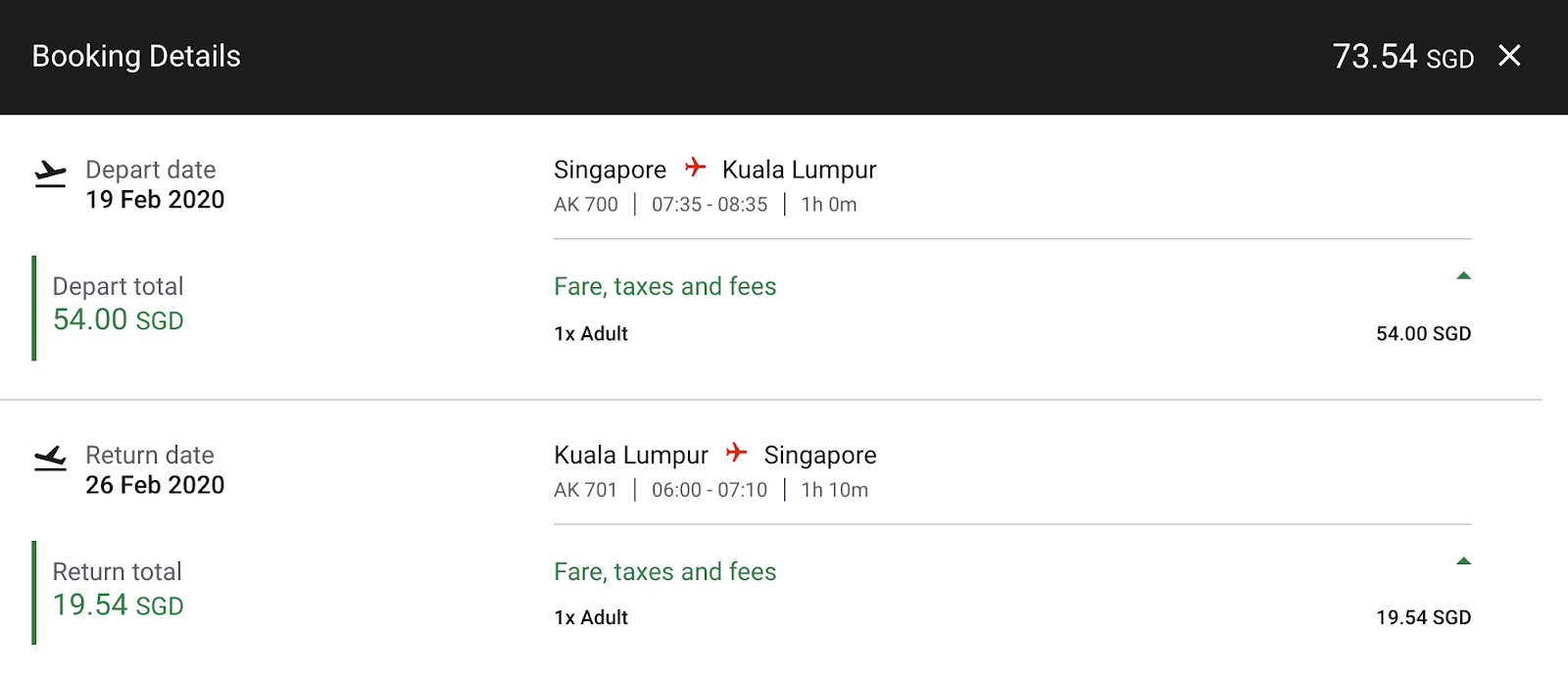
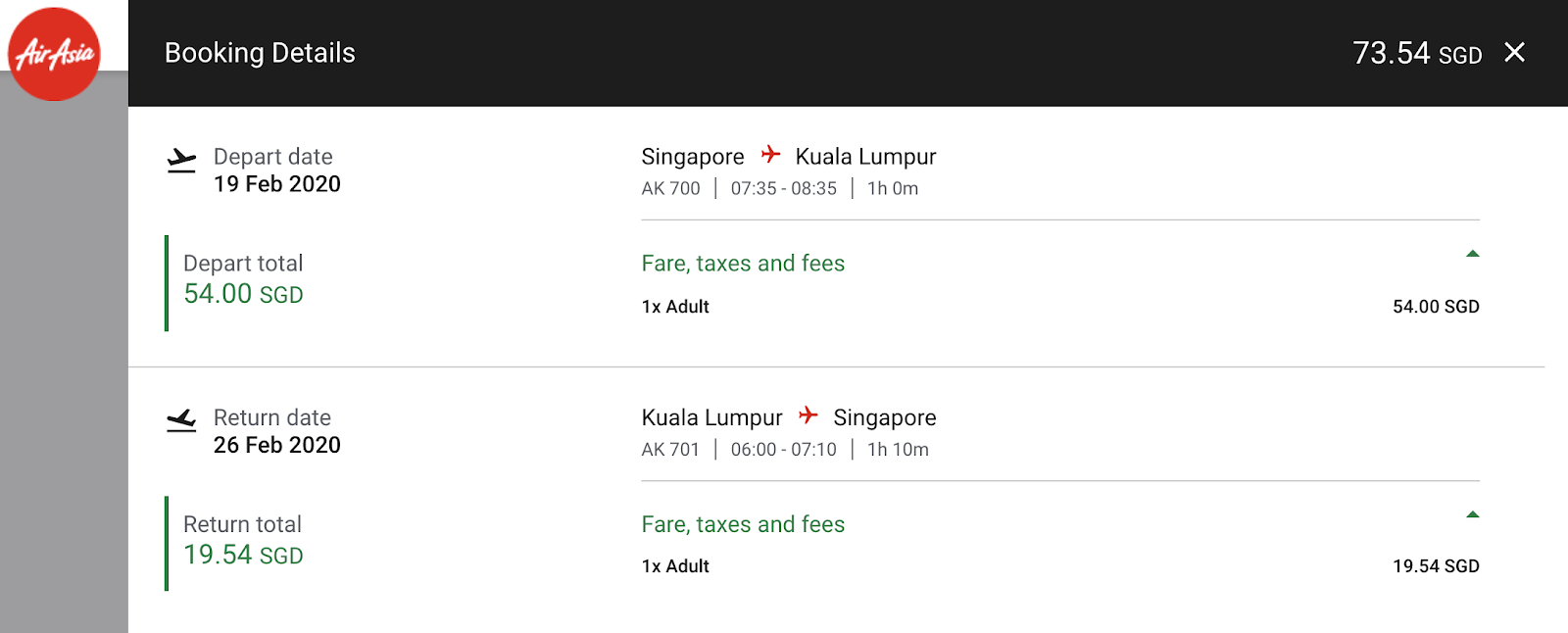
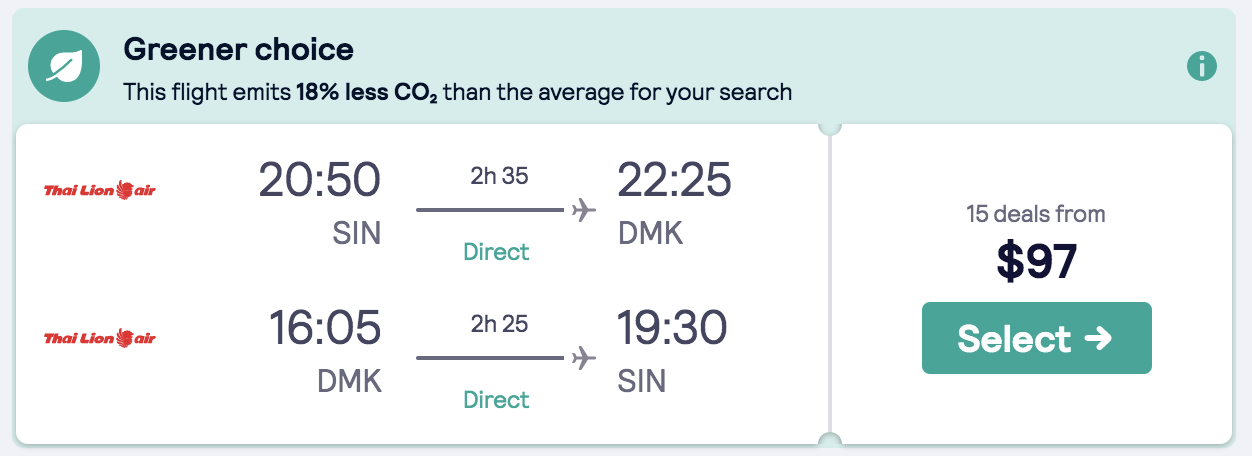
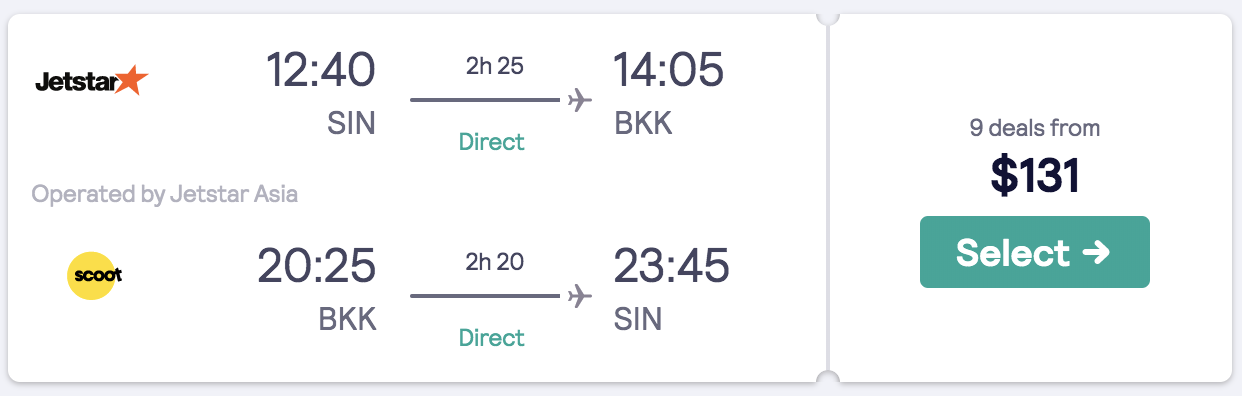
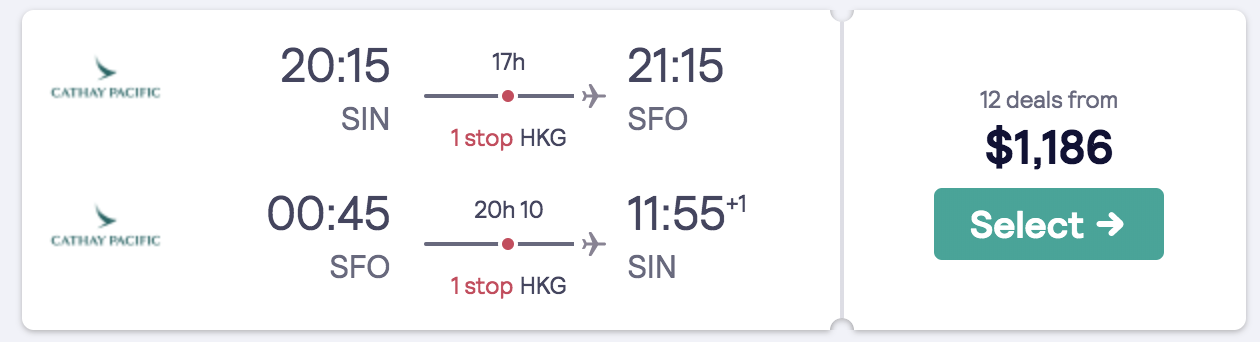
Lowest Ticket Price: I used SkyScanner to find the cheapest round-trip tickets (Economy/Budget direct flights only from any airline) using a future booking period of about 1 week in a non-peak season.  Ticket price is used for gauging the dollar value of the miles earned. See screenshots below for evidence. 

Amount Spending Period: Realistically, unless one has big ticket items to buy, the person has to spend "Amount to spend" over a few years. Based on annual expenses (chargeable to credit card) of S$20-25k.

Total Card Fees: Total annual fees paid throughout the "Amount Spending Period"I think it may be harder to waive off for miles cards (correct me if I'm wrong), hence a person has to pay the annual fees throughout the spending period.  1st year is usually waived but subsequent annual fee can range from $200-$500. Assume $200 for simplicity. Cashback cards usually have 2 years of waiver. 

Miles Benefit: Final dollar value of the min no. of miles earned, for comparing with "Cashback Earned". Calculated as Lowest Ticket Price minus Total Card Fees.

Analysis for Business Class

At the request of some readers, I did an analysis for a long-distance flight in business class (first class as well if I have time in the future). I assume a 5% cashback rate here since it should be attainable given the large expenditure.

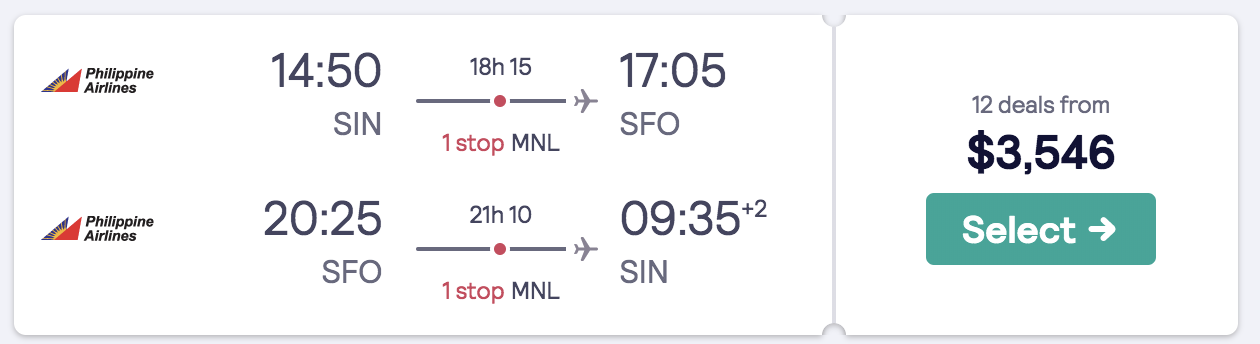
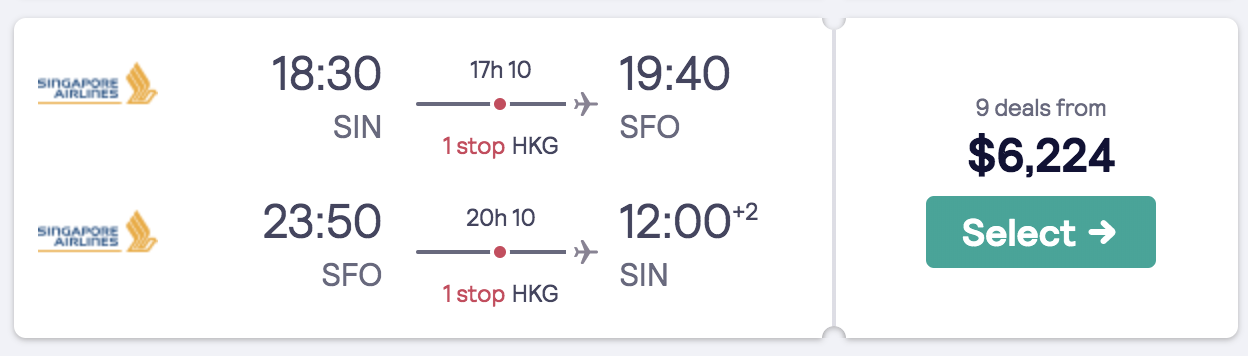
If we are able to earn 4 miles / $, then we'd only earn a cashback of $2,375.000 vs the miles benefit of  $ 3,146.00 (Phillipines Airline) / S$5824 (SIA). 


In this analysis for business class, miles will win hands-down if the rate is >= 4 miles/$, otherwise there is no clear-cut winner. 

SIA Business Class costs S$6224 while Phillipines Airlines costs only S$3546. Base on this review, it seems that the quality of service is pretty decent. This comes as no surprise as quality of service by airlines should more or less be the same due to commoditisation of air transportation. A flight is just a flight, how different can it be? So what exactly are we paying for with the S$2700 difference? The branding of the airline so that we can post on Insta?

I'm uncertain which dollar value to tag to the earned miles, S$3546 or S$6224? Assuming all airlines price their tickets profitably, the cost of providing a business class seat may be much less than S$3546, and thus we as consumers are overpaying for it -- overpaying to a degree larger than we are for an economy seat. This then again begs the question of whether is it worth it?

Conclusion

For general/daily/long-term spending, cashback appear to be better. Thus I will stick to cashback for the simplicity of it and the fact that miles don't offer much more benefits (assuming a realistic rate of 1.2 miles / $ accrual).

Miles would be better for big ticket item expenditure when one can accrue at >= 4 miles/$, and that's when the earned miles can be redeemed for long-distance / biz class / suites flights. It takes careful planning to spend the right amount of money on the right cards. The spending period should be as short as possible to avoid card fees. I will consider using miles if I have big-ticket items, probably for my upcoming house renovation.

The downside of miles is that it takes much time and patience to earn, manage and redeem the miles, let alone navigating the complicated ever-changing terms and conditions.  The value of cashback is immediately realised at the end of each month while the value of miles is only at the point of redemption. Til then, you're subjected to significant risk as the reward and miles redemption T&Cs may change any time at the banks/airline's discretion.

Also, with actual spending terms such as these, it is challenging to get more than 1.2-1.4 mile / $ on average in a sustainable manner (not spend for the sake of spending):

1.2 miles per S$1 locally, 4 miles overseas & on select airlines
• 4 miles per S$1 on select entertainment (Netflix, Spotify & more)
• 8 miles per S$1 on select travel & accommodations bookings (Agoda, AirBnB & more)
1.2 miles per S$1 locally, 2 miles overseas, 3 miles for online travel bookings
1.4 miles per S$1 local spend, 2.4 miles overseas, 10 miles at major airlines & airports
Earn up to 4.4mi/S$1 on overseas dining, shopping & accommodation, 3mi on Klook
1.2 miles per S$1 local spend, 2 miles overseas
• Promotions: Earn 1.5 miles per S$1 local spend w/ min. S$3k monthly spend
• Option One: 26,500 miles w/ 1st annual fee payment & S$9k spend within 3 months
• Option Two: 6,400 miles w/ 1st annual fee payment & S$3k spend within 3 months
1.4 miles per S$1 local spend, 3 miles overseas (S$2,000 min spend)

What many miles proponents don't tell you is that you'd be spending A LOT of time "hacking miles". There may be frustration, constant monitoring every transaction to ensure they translate to miles, etc. Just look at this entire list https://milelion.com/credit-cards/guide/, imagine you'd have to comb through the T&Cs (from airlines and banks) and apply for the appropriate cards for your spending.

Ultimately you'd probably have to juggle with multiple cards, read the fineprints very carefully and possibly  spend significant time talking to the respective customer service to claim missing miles or to clarify which expenditure is eligible.

Referring to this post and this post, we can use credit card thru GrabPay to earn miles, but there are severe restrictions on how much you can earn. Imagine once you have started earning miles at say 10x points or 4 mpd, halfway thru, the T&Cs change, and viola, what will happen to your miles earned so far? You may not be able to hit your target soon enough to redeem for that dream vacation.

Once you're in the miles game, you're in it for the long-haul, subjected to the whims of the banks and airlines which can change their T&Cs at their own discretions.

*Latest Update* Base on the terms: https://www.citibank.com.sg/global_docs/pdf/Citi_Rewards_Card_10X_Rewards_Promotion_Terms_and_Conditions.pdf
Mobile wallet topups have been excluded.


What do you think?

Lowest Ticket Prices

I have been a great fan of Scoot for its very cheap tickets during promotional periods, to Europe (Athens/Berlin), to SEA, to China, etc. So I think their ticket prices may even be lower than those I found on SkyScanner for this analysis. 

I don't buy flight addons (e.g. meals, extra leg space, seat selection, insurance, WiFi, etc.) even though I'm a tall person of ~1.8m and for certain plane models, the seats are actually quite spacious. 

North China (Shanghai)


Malaysia (KL)


Malaysia (KL)


Thailand (Bangkok Alternate Airport)


Thailand (Bangkok main airport)


US (San Francisco) Direct Flight


US (SF) cheaper but with 1 stop and still reasonable duration


US (SF) cheaper with 1 stop and reasonable duration


Saturday, October 26, 2019

Minimalist Expenses Since I Started Working

Recently, I decided to tabulate my expenses over the past ~7 years to check my spending habits.
Profile: staying with parents and owns a car. I like to write about expenses because I like to save money without compromising on quality of life.

The "Avg Yearly" is distorted as I bought my car between 3 and 4 years ago.
Expectedly, car and food are the biggest categories. Without a car, the average yearly would be ~$16k instead.

How about you guys? Are you spending more or less than me?

Car (auto transmission):
I realised it's the number of fuel top-ups / fuel consumption that matter more instead of the mileage/litre clocked per month. There are times when I have to travel to some places near my house for work that involve more traffic lights along the way, resulting in lower mileage and higher fuel consumption as compared to going to office that is farther away via a highway. However, both routes consume roughly the same amount of fuel on each trip hence the number of top-ups has been very consistent at an average of 2-2.5 times / month since Day 1.

I took good care of my car battery and tires and recently changed only after 3 years. I also go for the cheapest servicing and avoid buying unnecessary stuff. I also will make use of heavy rain to wash my car for free -- not the small rain kind as they tend to leave dust behind.

Remember to pump the right kind of petrol for your car -- if it just needs RON 95, then don't pump 98 which is unneeded and more expensive.

Car insurance: In my first year I had a relatively very expensive insurance as I was a "newbie" driver in terms of experience. Though there are ways to go around this issue, I'd still suggest readers out there get your driving license as early as possible. The insurance cost should get reduced significantly year after year especially with the NCD. In recent years I buy from FWD which is one of the cheapest and sometimes they even have promos such as birthday discounts and $200 CapitaLand vouchers.

Food:
Most of the time I eat at home or food courts / hawker centres. About once or twice a week I go to restaurants and even so I always make heavy use of restaurant booking apps and Entertainer.

Use Chope to get FREE Chope Dollars for each booking

I use the correct credit card for grocery shopping at Sheng Siong to get 5% cash rebates.

Computer/Electronics/Phone/Clothes/Furniture:
Usually I use them for as long as I can and avoid buying on impulse.

Phone:
I switched to a SIM-only plan with no extra SMS and voice minutes as I have little use for them. Usually I call via Whatsapp using data or get the caller to call me.

Insurance:
I just buy the cheap AVIVA-MINDEF group term life for early and terminal CI coverage, and an Integrated MediShield to cover hospital bills.

Holiday:
I make heavy use of ShopBack, Agoda and AirBNB for discounts. For example, Agoda usually gives 5-7% discount while ShopBack gives an additional 6% cashback for Agoda and $5 cashback for AirBNB.

Sign Up for ShopBack to get additional cashback for Agoda

Use AirBNB to get extra discount of up to S$45.

Just stay in 3-star hotels most of the time. You can also choose to stay slightly outside of city centers for cheaper rates, provided there are convenient transportation available. I usually don't buy flight add-ons such as extra baggage / extra leg room.


Avg Monthly Avg Yearly  Remarks
Total  $  168,804  $      2,010  $     24,115
Car  $    52,607  $         626  $      7,515 Monthly payment + petrol + parking etc.
Clothes  $      1,207  $           14  $         172
Computer  $      3,000  $           36  $         429
Dental  $        418  $             5  $           60
Education  $        780  $             9  $         111 Courses
Food & Groceries  $    25,200  $         300  $      3,600
Furniture  $        937  $           11  $         134
Health  $        650  $             8  $           93 Health-related expenses
Insurance  $      6,300  $           75  $         900
Parents  $    14,706  $         175  $      2,101 Allowances
Phone  $      3,819  $           45  $         546 Phone prices + bills
Tax  $    13,275  $         158  $      1,896 Income tax
Transport  $      6,480  $           77  $         926 Public transport; still taking occasionally 
Holiday  $    17,052  $         203  $      2,436
Treats  $      1,849  $           22  $         264 Gifts, treats including friends' weddings
Others  $    10,526  $         125  $      1,504 Unnecessary spending
Wedding  $    10,000  $         119  $      1,429


Saturday, April 13, 2019

The 1st million-dollar milestone in my life

I have been very busy and neglected this blog for a while.

I have finally achieved a S$1m net worth, which isn't a lot nowadays compared to the past. So much for toiling and going through BS in the past ~6.5 years.

See the breakdown here: https://my-radical-thoughts.blogspot.com/p/blog-page.html

The market and COE (Cat B and Open) have recovered considerably YTD, leading to an increase in the investment and car portions.

How do I feel about it? "Nonchalant" is the word. Due to my insatiable appetite for more $, I have already set myself a goal of earning another million.

I also feel like my life thus far is just all about working hard to chase after the dollar sign -- it seems nothing else is more important than having more $ in the bank.

Tuesday, February 5, 2019

Tips on Saving $ and Expenses Update

Here's an uncommon tip to save $ for that once-in-a-life-time event: buy your wedding ring at a tax-free place -- Changi Airport. That's right, I did buy my ring there and saved 7% * $10,000 = $700 worth of GST.   Plus you can accumulate iChangi points and use them to redeem for lounge access and Entertainer 1-for-1 membership.


My monthly expenses are still pretty much the same as ever, albeit with some slight changes after my wife moved in to stay put with me at my parents' place.

The usual expenses:
1. Eating out : We have to eat out for lunch/dinner during workdays and "date nights". We still stick to hawker food or Subway as cheap alternatives to restaurants. I estimate this to be $100-$150 per pax, barring any special occasions. 

2. Groceries: I have greatly reduced my consumption of alcohol nowadays, thus saving about $20-$50 worth of beer each month. We spend < $100 each month on fruits, fresh cow and soya milk, and occasional snacks. To eat healthily, we consume more fruits and avoid foods with much preservatives, fats, sugar and salt, especially those instant and canned. Instant cup noodles used to be my favorite when I was a teenager, but now no longer. 

We try to go for cheaper and nutritious fruits / veggies like baby carrots, oranges, watermelons, apples and bananas. And indulge in more expensive ones when there are promotions.

3. Phone bill: We both switched to SIM-only plans which are around $26 / month.

4. Car-related : About 2.5 petrol pumps on average per month cost ~$120 in total depending on the ever-fluctuating price. Another $80 for season parking at home and $110 at work.

5. Insurance: I pay  ~$50 /month for AVIVA Term Life (Early CI and terminal CI)

Travelling : I always fly with budget airlines (e.g. Scoot, Jetstar) and book 3-star yet decent hotels through Agoda usually with 6% discount and try to eat cheap local food. I avoid expensive tourist traps. 

With such minimal expenses, I find it hard to clock $500 on my UOB credit card to earn the bonus interest. 

AI is real and so is the bubble

Nowadays you can't avoid seeing the word "AI". AI is everywhere. Every company is rapidly adopting AI. Google today just relea...